
Road Safety Application
We have developed, and patented a contact less sensor concept for detecting slippery road conditions and other road states. It's called Road eye.
Detecting and monitoring slippery road conditions
We have developed, and patented (pat number SE 531949C2) a contact less sensor concept for detecting slippery road conditions and other road states. It's called Road eye.Road eye measures the road reflectivity at a few infra red laser wavelengths which are absorbed in ice and water at different extent. The primary data is converted to quantities relevant for traffic safety purposes like high or low friction or dry or wet road surface.
Vehicle mounting
Vehicle mounting
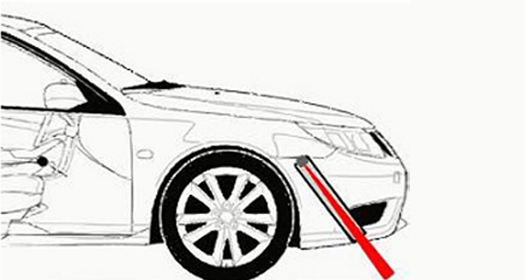
The Short Distance version Road eye SD is designed for vehicle mounting.
Road eye SD in the IVSS project
We have been partners in the "Road Friction Estimate" part of the IVSS project, RFE. Part 1, RFE1 was reported in 2007 (IVSS report) , and part 2 (IVSS report) was reported in spring 2011.
In the vehicle industry there is an interest in estimating the road friction since a lot of systems in a modern vehicle like ABS and EPS can be better optimized if the road friction coefficient is known.
In the project the Road eye SD sensor has been tested by the other partners of the project from the Swedish vehicle industry like VOLVO Technology, VOLVO Cars, SAAB and HALDEX. The Road eye is compared with other methods to estimate friction between the tire and the road surface like tire slip detection. The results are promising.
Continuous road-state data
One result is that the main advantage of Road eye over the slip detecting methods is that Road eye is producing data continuously while slips only occur when braking, acceleration or steering.
The intelligent road project
There are some interesting activities going on today where the Road eye technology is the key component. The "intelligent road" project in northern Sweden and Finland is an interesting example.
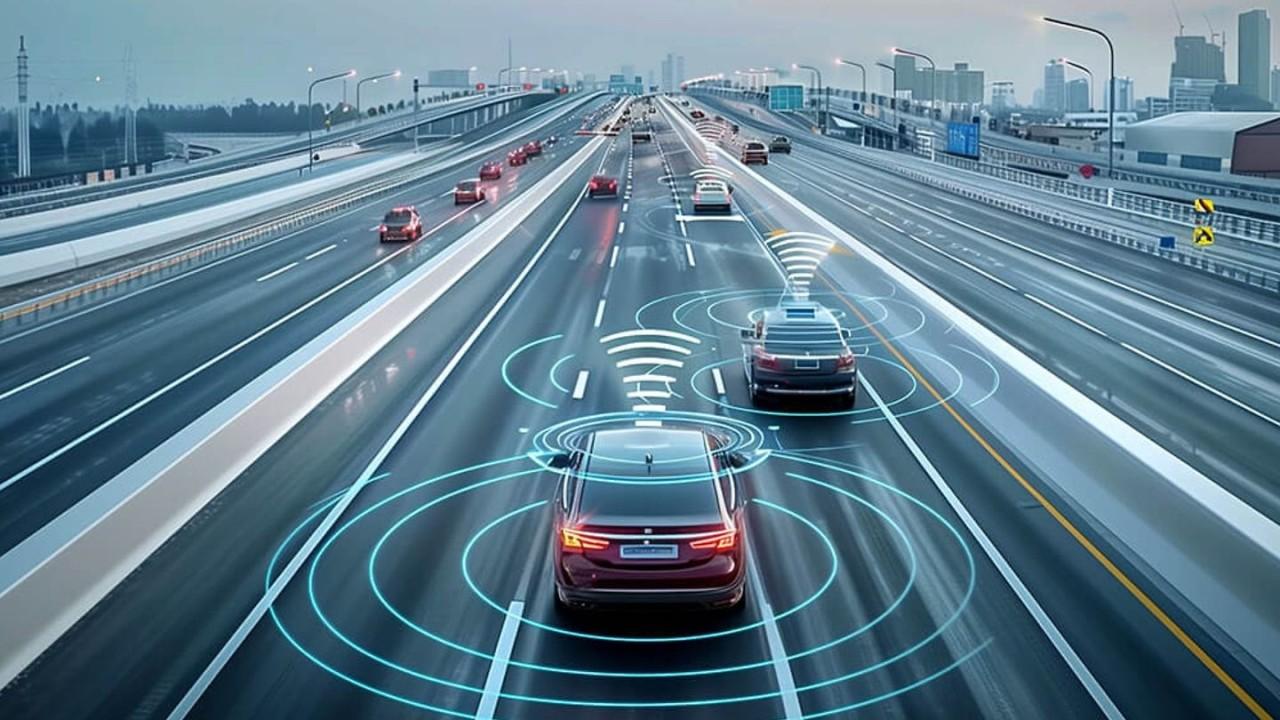
They have mounted Road eye SD sensors in cars who also have GPS receivers and are connected to the internet.
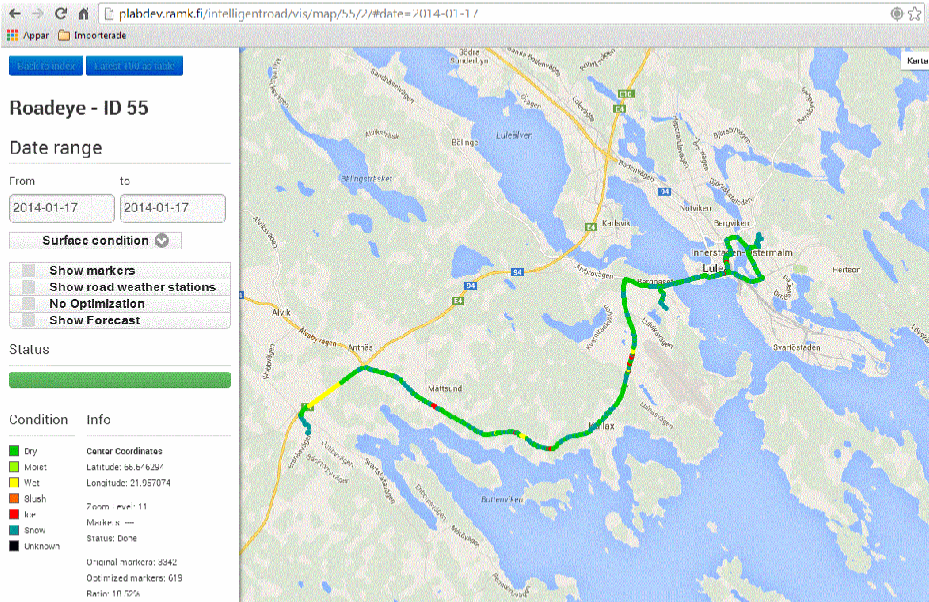
The the road state data and the coupled GPS data are mapped on maps available on the internet. Below is a screenprint of such a map.
Road condition mapped on the internet
The potential of this technique
The potential of this techique is enormous for actors who are interested in the road condition in a region like:
Roadkeepers
Public transport companies
TV and Radio
Road side mounting
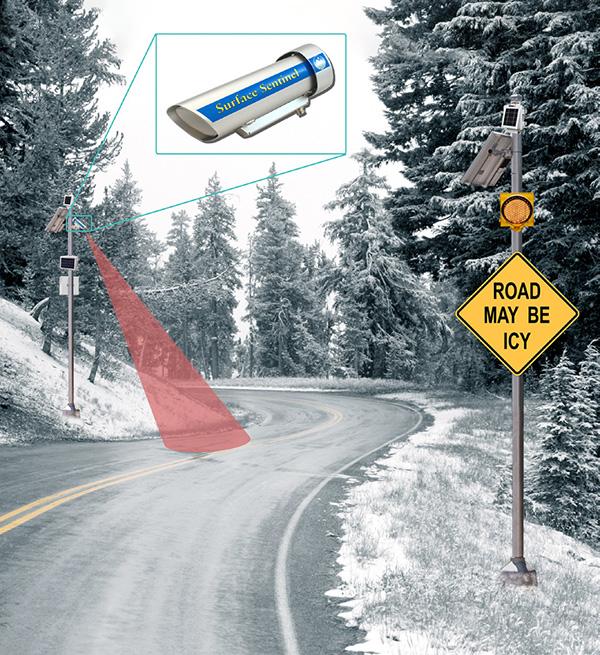
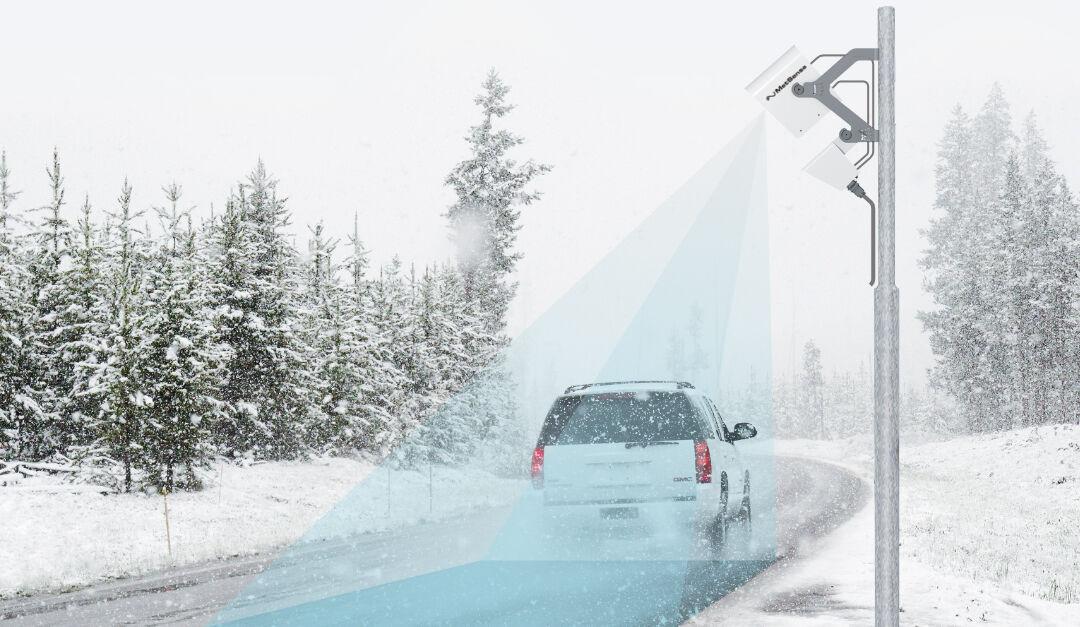
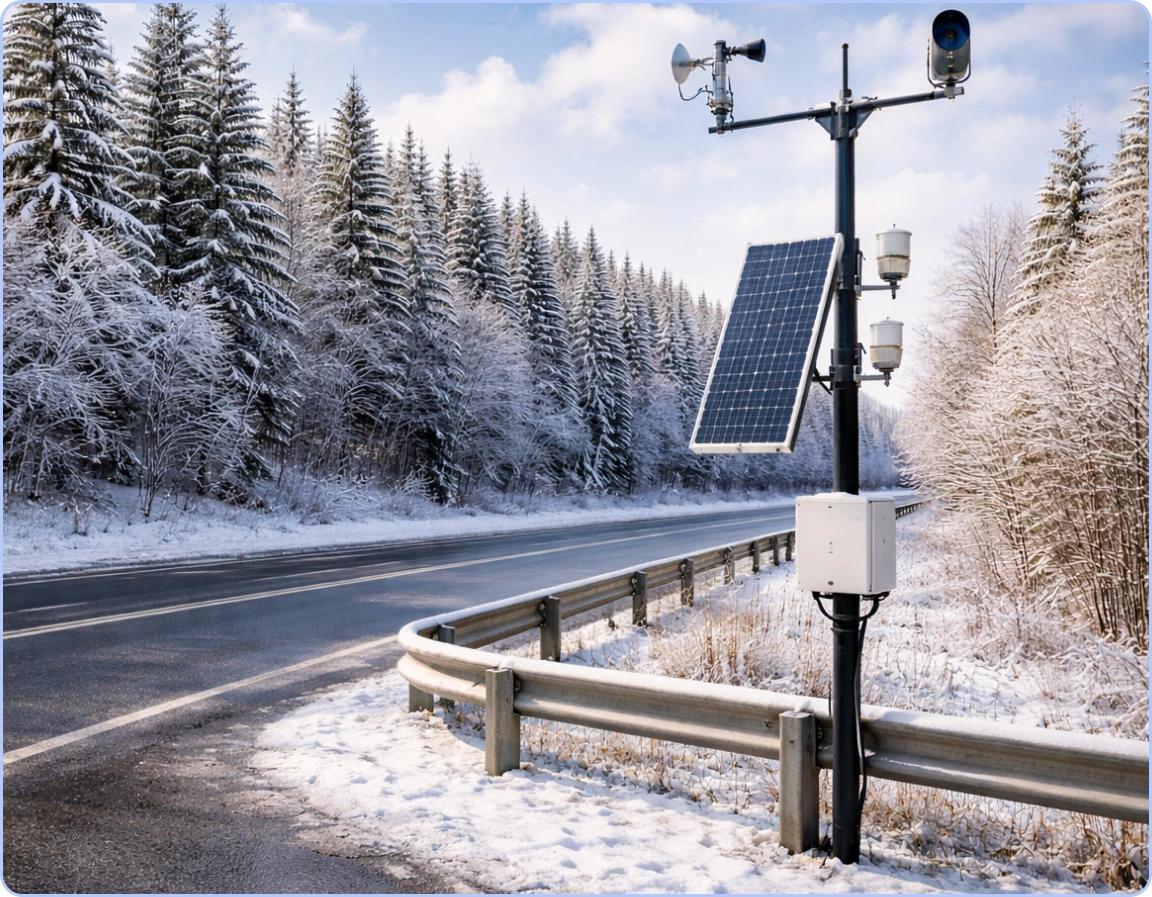
The Long Distance version Road eye LD is designed for mounting beside the road.
The Road eye LD sensor inbuilt in a standard camera casing.
The sensor mounted on a tower beside the road
A number of road states
The Road eye LD is able to identify a number of road states. Examples on road states that can be identified are:
Dry road
the most frequent and probably the most important road state to detect. All other road states are more or less problematic for the traffic. So if something else than a dry road is detected the risk for accidents is increased.
Wet road
Wet road conditions can affect traffic safety and road friction.
Black ice
Probably the most dangerous road state since it is very hard to see the difference between black ice and "wet road" with human eyes.
Packed snow
the most frequent road state on winter roads in North Sweden.
New fallen snow
New fallen snow is another road state that can be identified by the sensor.
Tested in cooperation with SVEVIA
The sensor is tested in cooperation with SVEVIA at two sites in Sweden during the winter season 2008-2009.
The data were collected via the GPRS system together with pictures from a web camera - a powerful combination.
Practical road applications
The road state information is supposed to be used for different purposes like:
Optimizing winter road maintenance
Optimizing winter road maintenance
Setting speed limitations
Setting speed limitations on variable traffic signs
Monitoring road conditions over time
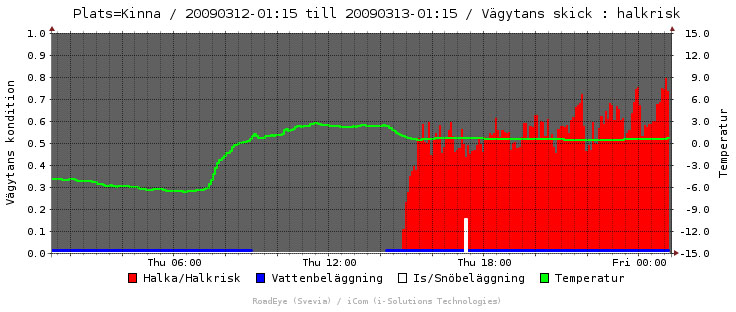
The picture below is from an occasion with falling snow on a road treated with salt. We can see that the road was dry until about 2 p m. After that the snowfall built up slush resulting in the red bars in the graph. At about 5 pm we can see a small white line. This white colour is an indication on lighter colour on the slush. The green line is temperature